
Evidence check
BPC-157: reading the preclinical evidence honestly
One of the most-published research peptides has a genuine literature base and a firm ceiling on what that literature can support.
Veritide Research · 11 August 2026 · 6 min read
BPC-157 is a synthetic pentadecapeptide — fifteen amino acids — related to a sequence identified in human gastric juice. It has one of the larger preclinical literatures of any research peptide, and almost none of that work involves humans.
What has been studied
- Fibroblast migration and proliferation in cell-culture models of tissue repair.
- Angiogenic signalling, including reported VEGFR2 pathway activity in vitro.
- Rodent models of tendon, muscle, gastrointestinal and nerve injury, with histological and functional outcome measures.
- Gastrointestinal models, reflecting the origin of the sequence.
The stated limitations
No completed large-scale randomised human trials have been published. Reviewers have noted that a substantial share of the rodent literature originates from a small number of research groups, which bears on reproducibility. Animal-model findings establish mechanism and plausibility; they do not establish efficacy or safety in any other species. In January 2022 the World Anti-Doping Agency added the compound to its Prohibited List — a regulatory classification, not a research finding.
BPC-157 is not licensed as a medicine in the United Kingdom. It holds no MHRA marketing authorisation and is not approved for human or animal use.
Why characterisation matters in this literature
Short peptides are comparatively straightforward to synthesise, and the published record contains material of varying characterisation. Deletion sequences, where a single residue is absent, are the characteristic impurity and are not visible in a purity percentage unless the chromatogram is shown. For a fifteen-residue peptide, identity confirmation by mass spectrometry is a minimum standard for interpreting any result.
Compounds referenced
Reference profiles: mechanism, published evidence and UK regulatory status.
Reference materials mentioned here
For laboratory research use only. Not a medicine and not for human or animal use.
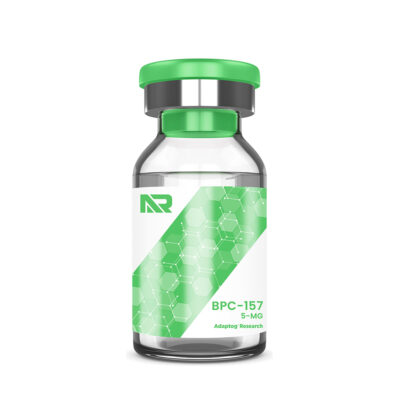
Veritide does not sell or supply anything. This links to a third-party UK laboratory supplier; we may earn a commission if you buy through it, at no extra cost to you. Materials are sold for laboratory research use only and are not licensed medicines.
Sources
Published for research and educational reference only. Not medical advice. No dosing, administration or acquisition guidance is provided.