Retatrutide
Triple incretin receptor agonist
An experimental peptide that acts on three hormone receptors. Researchers studied it in phase 2 trials involving weight and blood sugar.
Plain-English peptide research. Affiliate links are disclosed.Peptides explained in plain English, from published research. Veritide sells nothing; some links to a third-party UK laboratory supplier earn us a commission. Research and educational reference only — not medical advice.


Also cited in the literature as Metastin / kisspeptin-54
A natural brain hormone that sits at the top of the reproductive hormone chain. University research groups have studied it in people.
Regulatory status: Not licensed as a medicine in the United Kingdom. It holds no MHRA marketing authorisation, has no approved indication, and is not approved for human or animal use.
Hormone & signalling research
Research stage: Early-phase academic human studies published
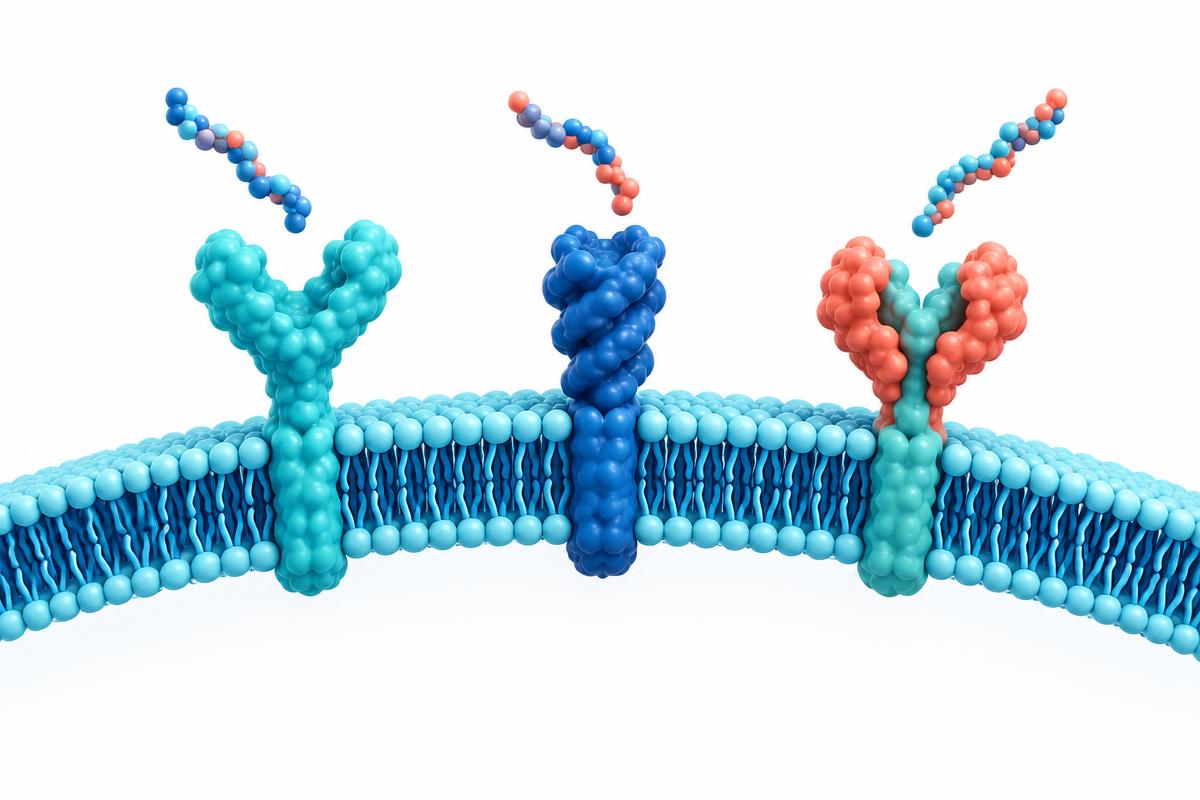
The research pathway — not every compound has reached human trials. Illustrations are simplified, not study results.
Kisspeptin is a hormone made in the hypothalamus. Its discovery explained how the brain starts puberty and controls reproductive hormones.
Studies found that kisspeptin acted on the KISS1R receptor to trigger release of gonadotropin-releasing hormone, which in turn drives luteinising hormone and follicle-stimulating hormone.
University research groups did give this to volunteers. They reported rises in luteinising hormone and differences in brain-imaging responses to emotional and sexual images compared with placebo.
It was also studied in IVF research as a way to trigger egg maturation.
The studies were small, short and tightly supervised, and no licensed medicine exists.
For laboratory research use only. Not a medicine and not for human or animal use.
Veritide does not sell or supply anything. This links to a third-party UK laboratory supplier; we may earn a commission if you buy through it, at no extra cost to you. Materials are sold for laboratory research use only and are not licensed medicines.
Triple incretin receptor agonist
An experimental peptide that acts on three hormone receptors. Researchers studied it in phase 2 trials involving weight and blood sugar.
Dual GLP-1 / glucagon receptor agonist
An experimental peptide based on a natural gut hormone. Researchers studied it mainly in phase 2 and phase 3 trials in China.
Synthetic pentadecapeptide
A laboratory-made peptide made of 15 amino acids. Almost all published research involved cells or rodents rather than people.